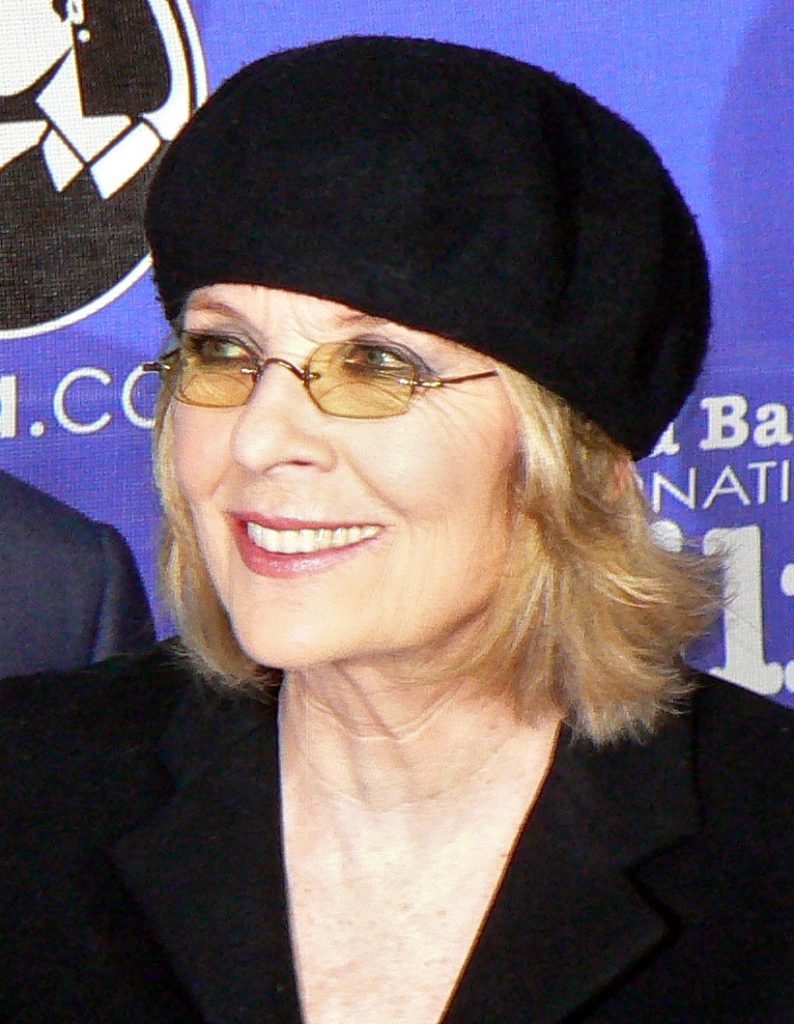
Photo: Sbillick / Wikimedia Commons / CC BY 2.0
Diane Keaton has spent more than five decades proving that lasting success in Hollywood does not require following a conventional path. With her distinctive voice, understated humor, fearless fashion sense, and ability to move between comedy and drama, Keaton created a career that has always felt uniquely her own.
Born Diane Hall in Los Angeles in 1946, she grew up in Southern California and developed an early interest in performing. After studying drama, she moved to New York and began working on stage. Her breakthrough came when she appeared in the Broadway production of Play It Again, Sam, written by Woody Allen.
That collaboration helped open the door to film, but Keaton soon demonstrated that she could not be defined by any single director or type of role.
The Role That Changed Everything
In 1972, Keaton appeared as Kay Adams in The Godfather. The film became a landmark in American cinema, and Keaton returned for later installments of the saga.
Yet one of the most important turning points in her career came several years later with Annie Hall. Her performance as the charming, independent, and sometimes unpredictable Annie became inseparable from the film’s identity.
Keaton won the Academy Award for Best Actress for the role. Just as importantly, the character introduced audiences to a style that seemed unusually personal: loose trousers, vests, ties, hats, and layered clothing inspired partly by Keaton’s own wardrobe.
Instead of changing herself to fit Hollywood’s expectations, Keaton made individuality part of her appeal.
Refusing to Stay in One Lane
After Annie Hall, Keaton could easily have remained primarily a romantic-comedy star. Instead, she continued taking very different roles.
She earned acclaim for dramatic performances in films including Reds and Marvin’s Room, while continuing to show her comic instincts in movies such as Father of the Bride, The First Wives Club, and Something’s Gotta Give.
That range became one of the defining characteristics of her career. Keaton could portray vulnerability without appearing fragile and eccentricity without turning a character into a caricature.
She also expanded beyond acting, working as a director, producer, photographer, and author. Her interests in architecture, design, photography, and preservation reinforced the sense that her creative identity extended far beyond movie stardom.
Growing Older Without Disappearing
Hollywood has historically offered fewer substantial leading roles to women as they age. Keaton’s career followed a different trajectory.
Rather than retreating from public life, she continued appearing in major films and embracing characters whose age was part of their stories rather than something to hide. Her later career helped demonstrate that romantic comedy, friendship, reinvention, and personal growth do not belong exclusively to younger characters.
Her public image evolved in much the same way. The hats, tailored jackets, oversized silhouettes, and bold accessories that became associated with Keaton were not attempts to chase changing trends. They became extensions of a recognizable personal identity.
Why Diane Keaton Still Matters
Keaton’s longevity is impressive, but longevity alone does not explain her cultural staying power.
What makes her career distinctive is the consistency of her individuality. Across changing eras of Hollywood, she maintained an image that was recognizable without becoming frozen in time. She could be glamorous without appearing conventional, funny without forcing the joke, and vulnerable without surrendering independence.
Her career also offers a broader lesson about reinvention. Keaton did not simply repeat the success of The Godfather or Annie Hall. She moved through different genres, generations, and creative interests while preserving the qualities that made audiences recognize her in the first place.
More than fifty years after her breakthrough, Diane Keaton remains an example of how a performer can build something more durable than celebrity: a creative identity that belongs entirely to her.
Leave a Reply