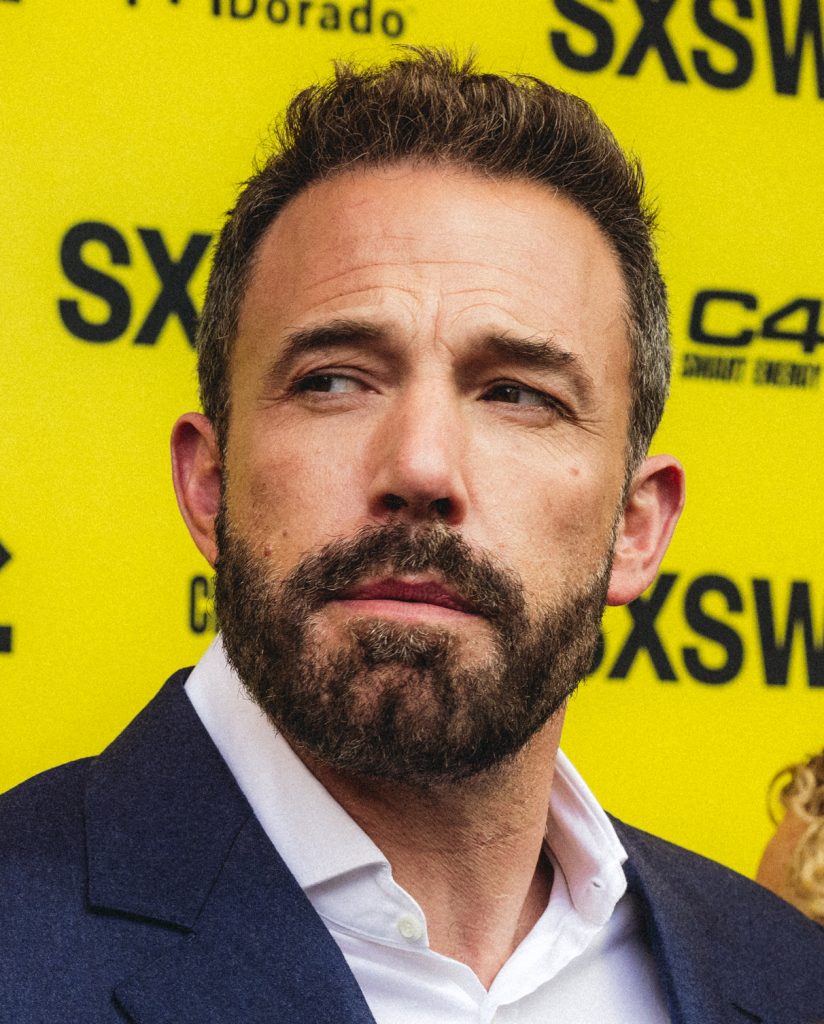
Netflix’s Animals, directed by Ben Affleck, opens like a straightforward kidnapping thriller and ends as something much colder: a story about how a public image gets manufactured.
Affleck plays Mark Kimball, a wealthy Los Angeles lawyer running for mayor. On Halloween night, his young son appears to be kidnapped, and the ransom demand is $7 million — money Mark no longer has, because he has poured his fortune into his own campaign. He and his wife Abigail (Kerry Washington) turn to Dayle Burton (Gillian Anderson), an expensive fixer who handles crises for powerful people quietly and, when necessary, lethally.
Then comes the twist the whole film turns on. Mark’s son was never taken. The kidnappers grabbed the wrong boy — Hector, the son of Ramon (Luis Gerardo Méndez), an undocumented immigrant whose partner Cecilia works in the Kimball household. The two boys were wearing matching Halloween costumes. Mark suddenly has to decide whether he will still pay $7 million, and risk everything, for somebody else’s child.
What Happens at the Ransom Drop
Mark goes ahead with the exchange in the concrete channel of the Los Angeles River, with Dayle’s armed associate positioned nearby. The drop collapses into a shootout. Dayle’s man kills two of the kidnappers, but a third, hidden gunman kills him and fatally wounds Dayle. The surviving kidnapper’s grievance, it emerges, is personal — he blames Mark’s past legal work for ruining his life.
With Mark and Hector cornered, the shot that saves them does not come from Dayle’s team. Ramon, who followed Mark to the exchange, kills the last kidnapper himself. The real hero of the night is the boy’s father — a man with no money, no status, and no legal right to be in the country.
Before Dayle dies, Mark takes the phone she used to record their arrangement — the one piece of evidence that could destroy him. She dies, and with her goes the only leverage anyone held over him.
The Lie That Wins an Election
What happens next is the film’s real ending. Mark and Ramon agree on a public version of the night: Ramon will say Mark saved his life and his son’s. Ramon tells that story at a press conference, and it transforms Mark from a floundering candidate into a hero — one who risked his life for an immigrant family. The Latino support Mark had been chasing all campaign falls into place, and he wins the mayoral race.
Mark’s own legal exposure is managed down to minor firearm charges, probation, and community service. Ramon, meanwhile, quietly leaves for Mexico with his family and the ransom money, which sets them up with a ranch and a new life. Nobody in the arrangement tells the public the truth, because the truth helps none of them. The film closes with Mark, the self-made hero mayor, already being talked about as a man with national ambitions.
The Night, in Order
Our own reconstruction of how the ending is assembled, beat by beat:
- Halloween night: a boy in a costume identical to Mark’s son’s is taken. The ransom demand is $7 million.
- The twist: the boy is Hector, the son of the Kimballs’ employee Cecilia and her partner Ramon. Mark’s son was never in danger.
- Mark hires fixer Dayle Burton, whose recorded calls become the only hard evidence of the arrangement.
- At the LA River drop, the exchange collapses. Dayle’s associate and Dayle herself are killed — by a gunman whose motive is revenge against Mark, not money.
- The saving shot comes from Ramon, who followed Mark. The father, not the fixer, ends it.
- Dying, Dayle loses her phone to Mark. The evidence disappears with her.
- The press conference: Ramon publicly credits Mark with the rescue. The story, not the night, wins the election.
- The settlement nobody announces: minor charges for Mark, and the ransom money leaves the country with Ramon’s family.
What the Ending Really Means
Animals is not based on a true story, though its premise deliberately echoes Akira Kurosawa’s 1963 classic High and Low, in which a rich man must decide whether to pay a ransom for an employee’s child taken by mistake. Affleck’s version pushes the idea somewhere bleaker. In Kurosawa’s film, paying the ransom costs the hero his fortune but saves his soul. In Animals, Mark pays almost nothing — and the rescue he did not perform becomes the foundation of his power.
That is the meaning of the title. Every character in the finale behaves like an animal protecting its own territory: Dayle protects her business, Ramon protects his son and then his family’s future, and Mark protects Mark. The one genuinely selfless act of the night — a father saving his boy — is the one thing the public is never allowed to know about. Mark does not become a villain in the ending. He becomes something more ordinary and more unsettling: a politician whose finest moment was staged, and who knows it, and sleeps fine anyway.
More from NotedLives:
- Inception Ending Explained: Was Cobb Still Dreaming? — https://notedlives.com/inception-ending-explained-was-cobb-still-dreaming/
- Naomi Watts at 58: The Decade of Rejection Before Mulholland Drive Changed Everything — https://notedlives.com/naomi-watts-at-58-the-decade-of-rejection-before-mulholland-drive-changed-everything/
Photo: Nomoretitanic / Wikimedia Commons / CC BY-SA 4.0
Leave a Reply