Author: cosmos700

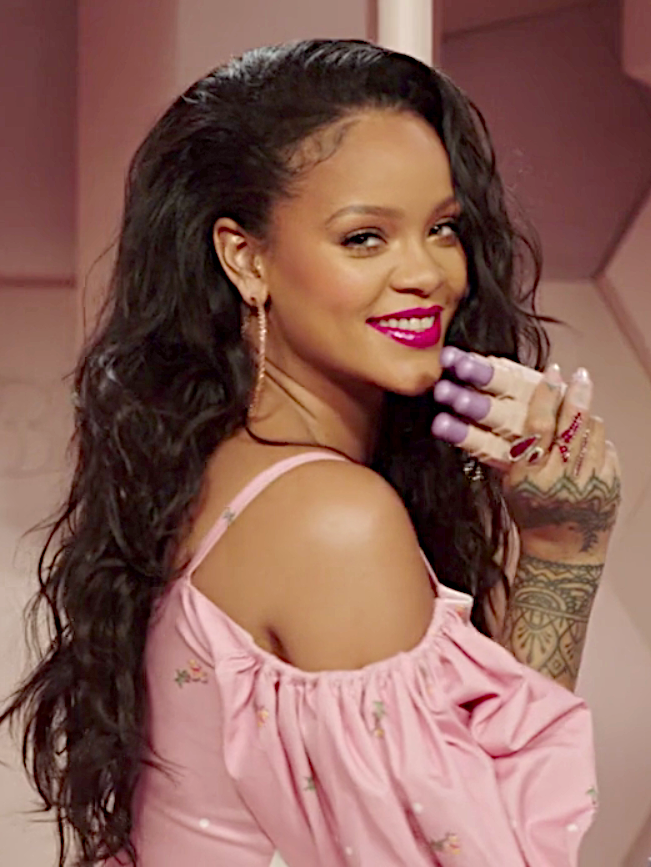
  • Rihanna’s Billion-Dollar Empire: The Beauty Brand That Eclipsed the Music

    Here is a sentence that would have sounded absurd in 2005: Rihanna is richer from makeup than from music.

    It is true. Forbes currently estimates her net worth at around $1 billion, while other trackers place it closer to $1.4 billion — a range that reflects how hard it is to value private companies from the outside. Either way, she remains the first female musician in history to reach billionaire status, a line she crossed in August 2021. She has not released an album since 2016.

    The engine of the fortune is Fenty Beauty. When Rihanna launched the cosmetics line in 2017 with luxury giant LVMH, she did something the beauty industry had talked about for years but never quite done: she released a foundation in forty shades at launch, built for skin tones the major brands had long treated as an afterthought. It sold out almost immediately and generated a reported $100 million in revenue within weeks. Rihanna owns half the company, and that stake is the single largest piece of her wealth.

    She did not stop there. Savage X Fenty, her lingerie line, grew into a billion-dollar-valued brand of its own, with Rihanna holding a significant share. Fenty Skin extended the empire further. Each venture followed the same playbook: find a category where the big players had grown complacent, show up with better inclusivity and sharper marketing, and let the founder’s own cultural gravity do the rest.

    It is worth pausing on how unusual this is. Plenty of celebrities lend their names to products. Very few build the products themselves into independent businesses worth nine figures apiece. Rihanna’s companies are joint ventures with serious partners — LVMH’s Kendo division on the beauty side — not licensing deals where she collects a royalty and walks away. That is the difference between a celebrity endorsement and an empire.

    The music, of course, is what made any of this possible. Born Robyn Rihanna Fenty in Saint Michael, Barbados, in 1988, she was discovered as a teenager, signed by Jay-Z to Def Jam at sixteen, and went on to sell more than 250 million records — one of the best-selling artists of all time. Fourteen of her singles reached No. 1 on the Billboard Hot 100. She has nine Grammy Awards. But in the accounting of her fortune, the catalog is the foundation, not the tower. Forbes has been explicit: the billion came from business, not from streaming royalties.

    There is a neat symmetry in it. A girl from Bridgetown who once helped her father sell clothes from a street stall now co-owns a beauty empire with the world’s largest luxury group. Barbados named her a National Hero in 2021. Her Clara Lionel Foundation funds education and health work around the world.

    The estimates will keep moving — private valuations always do, and Forbes has already revised hers down from earlier peaks as the beauty market cooled. But the shape of the story is settled. Rihanna did not become a billionaire by being the biggest pop star in the room. She became one by noticing what the room was missing.

    Photo: SIGMA / Wikimedia Commons / CC BY 3.0 (File: Rihanna Fenty 2018.png)
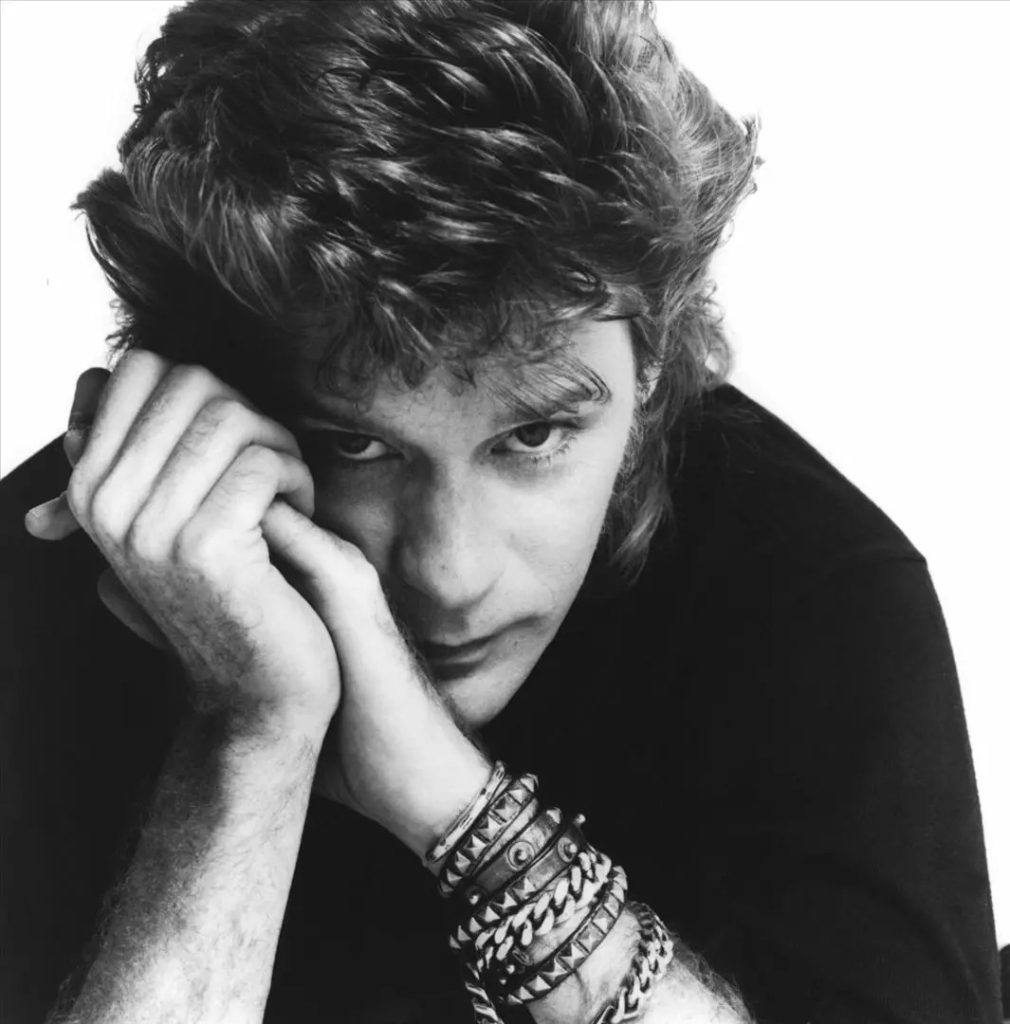
  • Daryl Hall at 80: The Soulful Voice Behind America’s Most Successful Duo

    Daryl Hall was born Daryl Franklin Hohl on October 11, 1946, in Pottstown, Pennsylvania, a small borough forty miles from Philadelphia. Both of his parents had music in their blood. His father came from a choral family. His mother was a vocal coach. The boy grew up surrounded by harmony.

    He started recording while still in high school and kept at it through Temple University, where he majored in music. In 1967, at a dance on campus, he met a freshman named John Oates. According to Hall, they ended up in the middle of a fight between rival groups, fled out the back together, and met on the elevator while making their escape. It was not the most graceful beginning to one of the most successful partnerships in pop history.

    Hall and Oates signed with Atlantic Records in 1972. Their early albums built a following, but the breakthrough came after they moved to RCA. From the mid-1970s to the mid-1980s, the duo scored six number one singles on the Billboard Hot 100: “Rich Girl,” “Kiss on My List,” “Private Eyes,” “I Can’t Go for That (No Can Do),” “Maneater,” and “Out of Touch.” They sold more albums than any other duo in music history.

    Their sound was a blend nobody else quite managed. Rock guitars, Philly soul, pop hooks. Critics sometimes dismissed them as lightweight. The record sales told a different story.

    Hall was always the voice. Robert Fripp, the progressive rock guitarist who produced Hall’s debut solo album, once wrote that “Daryl’s pipes were a wonder. I have never worked with a more able singer.” That solo album, Sacred Songs, came out in 1980. His biggest solo hit, “Dreamtime,” reached number five in 1986.

    The honors piled up. Songwriters Hall of Fame in 2004. Rock and Roll Hall of Fame in 2014.

    Then came the rupture. In November 2023, Hall sued Oates over the planned sale of his share of their joint publishing company, calling it “the ultimate partnership betrayal.” The legal fight was resolved through arbitration in August 2025. The fifty-year partnership was over.

    Hall did not slow down. Since 2007, he has hosted Live From Daryl’s House, an online series where he jams with guest musicians everyone from Smokey Robinson to CeeLo Green to Cheap Trick. In 2024, he released D, his first solo album in thirteen years, co-produced with Eurythmics founder Dave Stewart.

    He has also faced health battles. Lyme disease diagnosed in the mid-2000s forced concert cancellations. In 2025, he revealed he had received a kidney transplant from a living donor.

    Today, October 11, 2026, Daryl Hall turns eighty. The voice that defined an era of American pop is still going. The duo may be history, but the songs are not.

    Photo: RCA Records / Wikimedia Commons / Public domain (File: Daryl Hall (1984 RCA publicity photo).jpg)

  • A’ja Wilson at 30: Five MVPs and the Greatest Résumé in WNBA History

    On October 8, 2026, A’ja Wilson did what no basketball player had ever done. The Las Vegas Aces superstar was named WNBA Most Valuable Player for the fifth time — and the third season in a row. No one in league history had even won three straight. Wilson now stands alone.

    The Vote Wasn’t Close

    Wilson received 65 of 74 first-place votes. Minnesota rookie Olivia Miles finished a distant second, followed by Indiana’s Kelsey Mitchell and Caitlin Clark. The numbers behind the vote tell the story of total dominance.

    In 41 games, Wilson averaged 26.2 points to lead the league in scoring for the third consecutive season. She added 9.4 rebounds, 3.2 assists, 1.9 blocks, and 1.4 steals — elite production on both ends of the floor. She scored at least 20 points in 33 games and tied her own single-season record with 13 games of 30 or more.

    She also became the first WNBA player to average 25 points on 50% shooting and 40% from three-point range in a season.

    From Columbia to the Top of the World

    Wilson grew up in Columbia, South Carolina, and became a national star at the University of South Carolina under coach Dawn Staley. The Las Vegas Aces selected her first overall in the 2018 WNBA Draft, and she has never looked back.

    Her trophy case is unmatched: five MVPs (2020, 2022, 2024, 2025, 2026), three WNBA championships (2022, 2023, 2025), two Finals MVPs, and eight All-Star selections — all by age 30.

    For context on her five MVPs: Michael Jordan and Bill Russell each won five NBA MVPs. Wilson now sits alongside basketball royalty.

    The One That Made Her Cry

    This MVP hit differently. When WNBA commissioner Cathy Engelbert surprised her with the news — via a phone message from former Vice President Kamala Harris — Wilson broke down.

    “Fifteen-year-old A’ja wasn’t dreaming about being a five-time MVP,” she said. “She wasn’t dreaming about being a three-time champion. She was dreaming about surviving this world.”

    What’s Next

    The Aces are chasing another championship, and Wilson — still only 30 — keeps adding to a résumé that already has no equal in women’s basketball history. The question is no longer whether she’s the greatest. It’s how far she’ll stretch the gap.

    Photo: John Mac / Wikimedia Commons / CC BY-SA 2.0 (File: A’ja Wilson (53756794398) (cropped).jpg)

  • Nana Patekar, 1951–2026: The Fierce Voice Indian Cinema Will Never Replace

    Indian cinema lost one of its most uncompromising talents on October 8, 2026. Nana Patekar, the actor whose volcanic intensity and unmistakable voice defined an era of Hindi and Marathi cinema, died of cardiac arrest at his residence in Goa. He was 75.

    A Quiet Morning in Goa

    Patekar was found unconscious at his home in Dona Paula, Goa, in the early hours of Thursday morning. Rushed to Manipal Hospital, doctors performed CPR for 45 minutes but could not revive him. He was declared dead at around 5:20 AM. A medico-legal case was registered, and a post-mortem was ordered.

    Dr. Shekhar Salkar of Manipal Hospital told news agency ANI that Patekar had messaged a friend around 2:30 AM saying he was not feeling well. By the time help arrived, he was already slipping away.

    From Marathi Theatre to Bollywood

    Born Vishwanath Patekar in 1951 in Murud-Janjira, Maharashtra, he began his career in Marathi theatre before making his Hindi film debut with a small role in Gaman (1978). He spent the late 1970s and 1980s in India’s arthouse circuit, appearing in Mira Nair’s award-winning Salaam Bombay.

    His breakthrough came with N. Chandra’s Ankush (1986). Then came the roles that made him a legend: the volatile gangster in Parinda (1989), which earned him the National Film Award for Best Supporting Actor, and the firebrand crusader in Krantiveer (1994), which won him the National Film Award for Best Actor.

    An Actor Like No Other

    Patekar’s performances were marked by a trademark aggression and forceful dialogue delivery that no one has replicated. He excelled in both searing dramas (Agni Sakshi, Prahaar) and unexpected comic turns (Welcome), sharing the screen with Amitabh Bachchan, Shah Rukh Khan, and generations of stars.

    “He was one of those rare actors who never needed to do too much to make you sit up and watch,” said Akshay Kumar, who starred alongside Patekar in several films. “That voice, that intensity, that honesty in every performance — he was completely his own.”

    In 2013, the Indian government honored him with the Padma Shri for his contribution to cinema and the arts.

    A Legacy Beyond the Screen

    Off screen, Patekar was known as a philanthropist who gave quietly and generously, particularly to farmers in drought-hit Maharashtra. He is survived by his wife, from whom he was separated, and a son.

    From Marathi stage to National Awards to a state-honored farewell, Nana Patekar never softened, never compromised, and never gave a performance anyone could forget.

    Photo: Bollywood Hungama / Wikimedia Commons / CC BY 3.0 (File: Nana Patekar still5.jpg)

  • Michelle Yeoh at 64: The Stuntwoman Who Waited Four Decades for Oscar Night

    This week, HBO announced that Crazy Rich Asians is coming back — as an eight-episode sequel series, with the original cast returning and production set for 2027. Among the names on the call sheet is the one that now carries the most weight in Hollywood: Michelle Yeoh, reprising Eleanor Young, the formidable matriarch she played in the 2018 film.

    It is a homecoming eight years in the making. And it caps a run that no one — least of all the teenage ballerina from Ipoh whose dancing career ended before it began — could have scripted.

    The Ballerina Who Lost Her Stage

    Yeoh Choo Kheng was born August 6, 1962, in Ipoh, Malaysia, into a well-off family that encouraged her to stay in motion — swimming, basketball, and above all ballet, which she began at four. At fifteen she moved to England to train at the Royal Academy of Dance in London, dreaming of a professional career on stage.

    A spinal injury ended that dream. She shifted her sights to choreography and opening a ballet school — until 1983, when her mother secretly entered her in the Miss Malaysia pageant. She won. A 1984 Guy Laroche watch commercial opposite Jackie Chan followed, and the commercial led to a contract with the Hong Kong studio D&B Films, which billed its new discovery as “Michelle Khan” for export markets. She learned Cantonese on the job. The dancer’s discipline turned out to be the perfect preparation for what came next.

    Hong Kong’s Action Queen

    Yeoh had no formal martial arts training. She asked for action roles anyway and trained for hours daily in the gym. Her breakout, Yes, Madam! (1985), put her through her first real on-screen stunts, and a run of action films — In the Line of Duty, Magnificent Warriors — made her one of Hong Kong cinema’s most respected female action stars, famous for doing her own frequently dangerous stunt work.

    In 1988 she married Hong Kong businessman Dickson Poon and retired from acting. The marriage ended in 1992, and she came back with a vengeance: Police Story 3: Super Cop (1992), matching Jackie Chan stunt for stunt, proved she had lost nothing. Hollywood started paying attention.

    The Bond Girl Who Broke the Mold

    Her English-language breakthrough arrived as Wai Lin in the James Bond film Tomorrow Never Dies (1997) — a Bond girl who could fight as well as anyone on screen. Then came Ang Lee’s Crouching Tiger, Hidden Dragon (2000), where her Yu Shu Lien, the warrior carrying a lifetime of unspoken love, earned her some of the finest reviews of her career and introduced her to prestige-film audiences worldwide.

    The 2000s and 2010s filled in the résumé across every genre: Memoirs of a Geisha (2005), The Lady (2011) as Aung San Suu Kyi, Guardians of the Galaxy Vol. 2 (2017), and television’s Star Trek: Discovery (2017–2020) as the mirror-universe emperor Philippa Georgiou. She was working constantly, acclaimed widely — and still waiting for the role that would change everything.

    Eleanor and the $239 Million Milestone

    That role, paradoxically, looked like a supporting part. As Eleanor Young in Crazy Rich Asians (2018) — the steel-spined Singaporean matriarch guarding her family’s fortune and her son — Yeoh anchored the first all-Asian cast in a major Hollywood film in more than two decades. The film earned over $239 million worldwide and became a cultural landmark, a source of pride across the Asian diaspora.

    Four years later came the part that made history. As Evelyn Wang, the exhausted laundromat owner fighting through the multiverse to save her family in Everything Everywhere All at Once (2022), Yeoh gave the performance of her career. In 2023, at 60, she won the Academy Award for Best Actress — the first Asian performer ever to win the category, and the first Malaysian to win an Oscar in any category. A Golden Globe followed the same season. In 2024, President Joe Biden awarded her the Presidential Medal of Freedom.

    Why Michelle Yeoh Matters Now

    The HBO series is more than a reunion. Drawn from Kevin Kwan’s sequel novels China Rich Girlfriend and Rich People Problems, the eight-episode drama picks up where the film left off, with Constance Wu, Henry Golding, and Ronny Chieng returning as regulars and Yeoh back in a recurring role as Eleanor. Adele Lim, who co-wrote the original film, runs the writers’ room. Production begins in 2027.

    Off screen, the milestones keep coming: the Berlinale’s Honorary Golden Bear, the 2,836th star on the Hollywood Walk of Fame, a marriage to motorsport executive Jean Todt formalized in Geneva in 2023 after a nineteen-year engagement, and a scene-stealing turn as Madame Morrible in Wicked (2024).

    At 64, Michelle Yeoh has done what almost no action star has ever managed: she aged into prestige without surrendering the physical daring that made her famous. The ballerina who lost her stage found a bigger one. And this week, she walks back through the door of the family that made her a star — richer, decorated, and still doing her own stunts.

    Photo: ITU Pictures / Wikimedia Commons / CC BY 2.0 (File: Michelle Yeoh 2015.jpg)

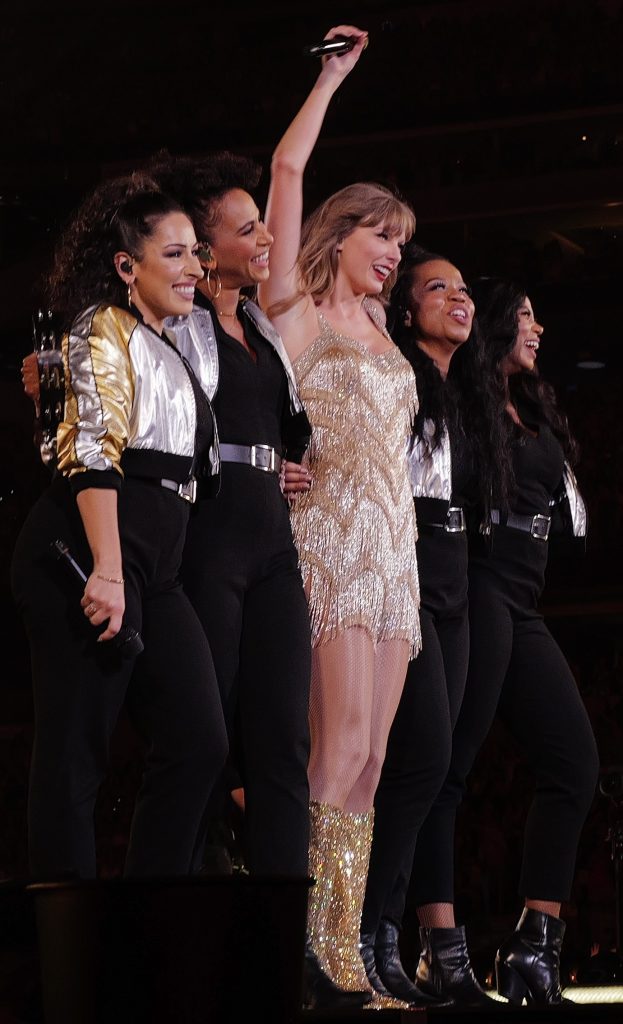
  • Taylor Swift at 36: Hollywood’s Biggest Night Wants Her — and Oscar Might Finally Call

    On October 17, Taylor Swift will close the Academy Museum Gala in Los Angeles — the film industry’s most glittering fundraiser of the fall — with a performance announced just this week. The museum’s director called her “an extraordinary talent whose work resonates around the world.” The subtext needed no translation: Hollywood is courting her, and the timing is no accident.

    Because for the first time in a career that has conquered every other award that matters, an Oscar nomination is genuinely within reach.

    The Song That Could Do It

    The vehicle is “I Knew It, I Knew You,” Swift’s contribution to the Toy Story 5 soundtrack — reportedly one of the year’s biggest soundtrack hits and now the center of a full Best Original Song campaign. The Academy begins preliminary voting in early December, with the shortlist announced December 15 and final nominations on January 21, 2027.

    Swift has written for film before — “Carolina” from Where the Crawdads Sing, “Beautiful Ghosts” from Cats, “I Don’t Wanna Live Forever” from Fifty Shades Darker — and never received a nomination. This time, the industry machinery is visibly aligning behind her: a closing slot at the Academy Museum’s own gala, co-chaired by Steven Spielberg, Kate Capshaw, Robert Rodriguez, and Tom Ford, honoring Charlize Theron, Colman Domingo, and John Carpenter. You don’t hand someone the final performance of awards season’s opening night unless you want the voters watching.

    The Director’s Chair

    What makes this moment different from her earlier film-music forays is that Swift is no longer just a songwriter lending a track. She has spent the last few years becoming a filmmaker in earnest.

    At the 2026 MTV Video Music Awards, she received the show’s first-ever Artist Director Honors and premiered “Patient Zero,” a music video she directed herself starring Dakota Johnson and Colin Farrell. She also released the EP The Life of a Showgirl: The Encore, extending the imperial phase that began with the Eras Tour — the highest-grossing concert tour in history.

    The throughline is control. Swift spent her twenties fighting for ownership of her work — famously re-recording her first six albums after her masters were sold out from under her — and her thirties turning that fight into an empire. Directing, producing, and now positioning for film’s biggest prize: each step has been about refusing to be a guest in someone else’s industry.

    The Girl From West Reading

    Taylor Alison Swift was born December 13, 1989, in West Reading, Pennsylvania, and raised on a Christmas tree farm. She learned guitar at twelve, moved to Nashville at fourteen, and signed with Big Machine Records as a teenager — a country prodigy writing her own songs when the industry still assumed teenage girls didn’t.

    The country era (Taylor Swift, Fearless, Speak Now) gave way to the pop detonation of 1989, the reputation-era reinvention, the folk detour of folklore and evermore, and the record-shattering Midnights and The Tortured Poets Department runs. Fourteen Grammys. The first artist to win Album of the Year four times. A billionaire many times over, largely from music itself — the thing the industry kept insisting was dying.

    Why Taylor Swift Matters Now

    There is a particular kind of cultural gravity that only a handful of living artists possess — the ability to make a museum gala, a football season, and an awards race all orbit the same person in the same month. (The gala falls one day before Travis Kelce and the Chiefs return from their bye week against the Chargers, a scheduling coincidence the internet has already noticed.)

    But the Oscar storyline is the one that would complete the set. Every major American entertainment award except that one already sits on her shelf. On October 17, in a room full of the people who vote, she gets to make her case the only way she ever has: by performing.

    At 36, Taylor Swift doesn’t need Hollywood. That, of course, is exactly why Hollywood wants her.

    Photo: Paolo Villanueva / Wikimedia Commons / CC BY 2.0 (File: Taylor Swift The Eras Tour Fearless Set Era (53108834197) (cropped).jpg)

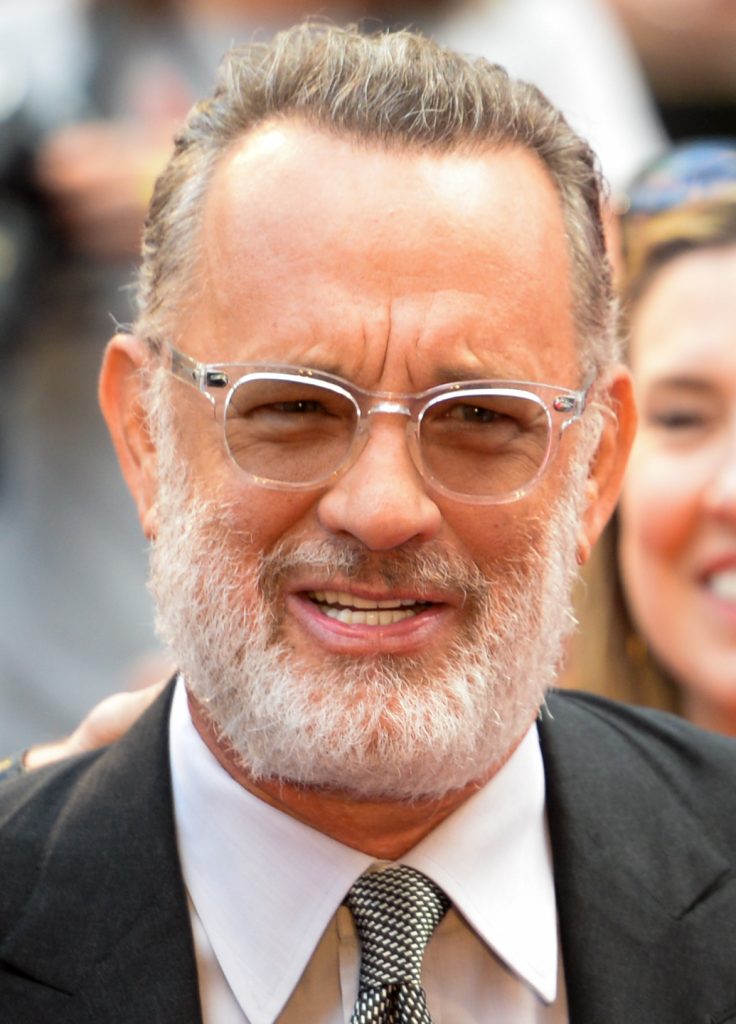
  • Tom Hanks at 70: How Hollywood’s Nicest Star Earned Every Bit of It

    He is the most trusted man in America who isn’t actually anyone’s dad. Polls have said it for years: if Tom Hanks tells you something, you believe him. That trust wasn’t manufactured by a studio. It was built, film by film, over nearly five decades — by an actor who made decency look like the hardest craft in Hollywood.

    Born July 9, 1956, in Concord, California, Thomas Jeffrey Hanks had a fractured childhood — his parents divorced when he was five, and he shuttled between households. He has described himself as a shy, awkward kid. What saved him was a high school production of The Mouse That Roared. He caught the acting bug so completely that he dropped out of college to intern at a Shakespeare festival in Ohio, hauling sets and learning the trade from the ground up.

    The Class Clown

    Hollywood first met him as a goofball. Bosom Buddies (1980–82), a sitcom about two men dressing as women to live in cheap housing, was disposable television — but Hanks was undeniably alive in it. A string of lightweight comedies followed until Big (1988), where he played a boy trapped in a man’s body and earned his first Oscar nomination. He was funny. Nobody yet thought he was important.

    The Turn Nobody Saw Coming

    Then, in the span of two years, he did something only one actor had ever done before.

    As a lawyer dying of AIDS in Philadelphia (1993), Hanks stripped away every comic tic and won the Academy Award for Best Actor. The very next year, as Forrest Gump (1994), he won it again — back-to-back Best Actor Oscars, a feat achieved only once before, by Spencer Tracy in the 1930s. The clown had become the conscience of American movies, and he’d done it without a trace of vanity. His Oscar speech for Philadelphia, thanking his gay high school drama teacher, was itself a small act of courage on live television.

    The Everyman Era

    What followed was the most reliable two decades in modern film: Apollo 13 (1995), Saving Private Ryan (1998), You’ve Got Mail (1998), The Green Mile (1999), Cast Away (2000) — for which he lost fifty pounds and talked to a volleyball — and Woody, the pull-string cowboy of Toy Story (1995), a role he has now played across thirty years. He became the man you cast when the story needs someone the audience will follow anywhere: into war, into space, onto a desert island.

    Nice as Discipline

    The “nicest guy in Hollywood” reputation could have been a trap — a brand that sanded off his edges. Instead, Hanks treated it as a discipline. The stories are legion and remarkably consistent across decades: the returned lost credit cards, the wedding photos crashed with grace, the crew members who say he knows everyone’s name. He collects typewriters. He is obsessed with World War II history. He writes essays. None of it feels performed, which may be the most Hanks-like quality of all: the total absence of calculation.

    Why Tom Hanks Matters Now

    At seventy, he occupies a position no actor has held quite this way before — not the biggest star, not the most decorated, but the most believed. In an era of synthetic everything, there is something almost radical about a career built on the proposition that sincerity is a skill and kindness is a choice you make daily, on camera and off.

    Most actors play heroes. Tom Hanks spent fifty years making audiences believe he might actually be one.

    Photo: Aiksu / Wikimedia Commons / CC BY 2.0 (File: Tom Hanks TIFF 2019.jpg)

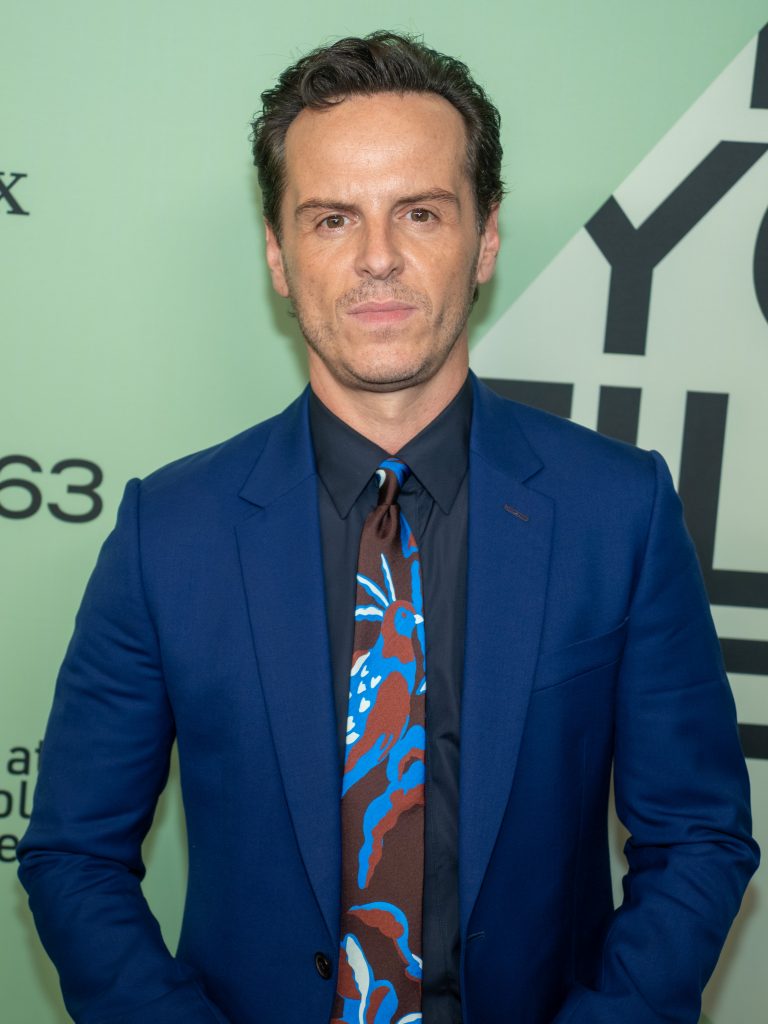
  • Andrew Scott at 49: The Role of a Lifetime, Thirteen Days Before 50

    Photo: Berlination / Wikimedia Commons / CC BY-SA 4.0

    Last night, the London Film Festival opened with a film about an actor who died at forty, played by an actor about to turn fifty. Andrew Scott — thirteen days from his fiftieth birthday — stars as Ian Charleson in Elsinore, and the early word from the premiere is the kind actors wait decades to hear.

    It is the latest peak in a career that has been quietly, stubbornly building toward this for thirty years.

    Born October 21, 1976, in Dublin, Ireland, Scott was the middle child in a Churchtown family — his father worked at an employment agency, his mother taught art. At Gonzaga College, a boys’ school in Ranelagh, he was embarrassed by a slight lisp and struggled to fit in. Acting classes became the place where the words came out right. His first screen appearance, at fifteen, was a television commercial for porridge.

    The Villain Everyone Loved

    For most actors, one iconic role is the ceiling. For Scott, it was the floor.

    As Jim Moriarty in the BBC’s Sherlock (2010–2017), he took a Victorian footnote and turned him into the most magnetic villain on television — all coiled menace and camp delight. The performance won him a BAFTA, and for years afterward he was “the Moriarty guy,” which is both a compliment and a trap. Hollywood knew exactly what to do with him: cast him as the creepy one. Spectre (2015) put him in a Bond film. It did not put him in the conversation.

    The Priest Who Broke the Internet

    Then came six episodes that changed everything. As the priest in the second series of Fleabag (2019) — the “Hot Priest” — Scott did something nearly impossible: he made restraint sexy and faith funny, often in the same scene. The will-they-won’t-they with Phoebe Waller-Bridge’s heroine became a cultural event. He won the Critics’ Choice Award, and suddenly the conversation wasn’t about villains anymore. It was about range.

    What the television audience didn’t always see was that Scott had never left the stage. He won his first Olivier Award in 2005 and his second — Best Actor — in 2019 for Present Laughter. His Hamlet (2018) and one-man Vanya (2024) confirmed what theatergoers had known for years: this was one of the finest stage actors of his generation, moonlighting as a TV star.

    The Leading Man, At Last

    The last few years have been a slow coronation. His lonely screenwriter in All of Us Strangers (2023) earned him a Golden Globe nomination. His Tom Ripley in Netflix’s Ripley (2024) — all watchful stillness and quiet menace — brought Emmy and Golden Globe nominations and a Peabody Award. The creepy-guy typecasting was dead. In its place: leading man.

    Elsinore

    Which brings us to last night. In Elsinore, Scott plays Ian Charleson — the Chariots of Fire star who, diagnosed with AIDS in late-1980s London, performed Hamlet at the National Theatre while dying. Charleson completed twenty-four grueling performances and died in 1990 at forty. Scott doesn’t just star; he produced the film. On the red carpet, he called Charleson a man of “great zest for life” who deserved to be remembered for how he lived, not only how he died. The early critical response has been rapturous, with awards talk already beginning.

    Why Andrew Scott Matters Now

    There is a particular kind of actor who gets better the longer you watch — who treats a porridge commercial, a Bond villain, a priest, and Hamlet as the same job done with the same seriousness. Scott spent his thirties being underestimated and his forties proving the underestimation wrong.

    He turns fifty on October 21. The role of a lifetime arrived thirteen days early.

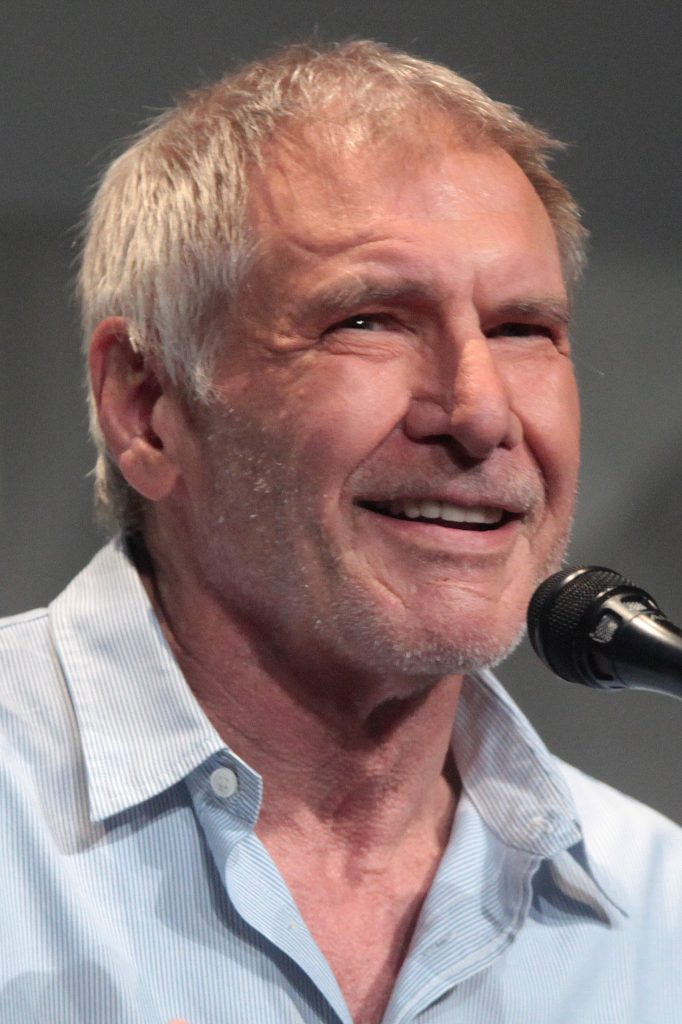
  • Harrison Ford Was a Carpenter Before He Became One of Hollywood’s Biggest Stars

    Photo: Gage Skidmore / Wikimedia Commons, CC BY-SA 2.0

    Before Harrison Ford became Han Solo, Indiana Jones, and one of the most recognizable movie stars in the world, he spent years wondering whether acting would ever become a real career.

    His rise was not quick. It was not predictable. And that may be exactly why his story has lasted.

    Ford arrived in Hollywood in the 1960s and began landing small acting jobs, but success did not follow. Frustrated with the roles he was being offered and needing to support his growing family, he turned to something more practical: carpentry.

    It seemed, for a time, that Hollywood might become only a chapter in his past.

    The Carpenter Who Never Quite Left Hollywood

    Ford became skilled enough as a carpenter to earn a living, taking jobs for people in and around the entertainment business.

    But acting never completely disappeared.

    While working as a carpenter, Ford remained close enough to Hollywood that an unexpected opportunity could still find him. Small roles gradually followed, including an appearance in George Lucas’s American Graffiti.

    Then came the role that changed everything.

    George Lucas was preparing Star Wars and Ford became involved during the casting process. What followed transformed not only Ford’s career but popular culture.

    As Han Solo, Ford brought humor, confidence, and vulnerability to a character who could easily have been little more than a swaggering space adventurer.

    When Star Wars became a phenomenon in 1977, Harrison Ford was suddenly a star.

    He was already in his thirties.

    From Han Solo to Indiana Jones

    Many actors spend an entire career hoping to create one character audiences remember for generations. Ford created two.

    Just a few years after Star Wars, he appeared as archaeologist and adventurer Indiana Jones in Raiders of the Lost Ark.

    The fedora, leather jacket, whip, and reluctant grin became instantly recognizable.

    Yet Ford continued pushing beyond blockbuster adventure. Blade Runner gave him one of his most enduring science-fiction roles, while Witness earned him an Academy Award nomination for Best Actor. Films such as The Fugitive, Air Force One, and Presumed Innocent demonstrated how comfortably he could move between action, drama, suspense, and character-driven stories.

    His career became remarkable not simply because he had hits, but because audiences continued accepting him in new roles decade after decade.

    Success Arrived After the Struggle

    The most compelling part of Ford’s story may be what happened before fame.

    There was no straight line from aspiring actor to movie star.

    There were small parts, disappointments, practical decisions, and years when another profession paid the bills.

    Ford’s carpentry years have become an enduring part of his story because they challenge the idea that a successful life must reveal itself early.

    Sometimes the turning point arrives later.

    And sometimes the work that looks like a detour is simply what allows someone to keep going long enough for the right opportunity to appear.

    Why Harrison Ford’s Story Endures

    Harrison Ford’s career now spans generations.

    Some audiences first knew him as Han Solo. Others discovered him through Indiana Jones, The Fugitive, or Air Force One. Younger viewers have encountered him through later Star Wars and Indiana Jones films and television roles.

    But the beginning of his story remains just as powerful as the famous chapters that followed.

    Before the premieres, awards, iconic characters, and worldwide recognition, Harrison Ford was a struggling actor who found another way to make a living without completely abandoning the possibility that his life might still change.

    It did.

    His story is a reminder that a slow beginning does not determine the ending — and that one unexpected opportunity can transform years of persistence into a life no one could have predicted.

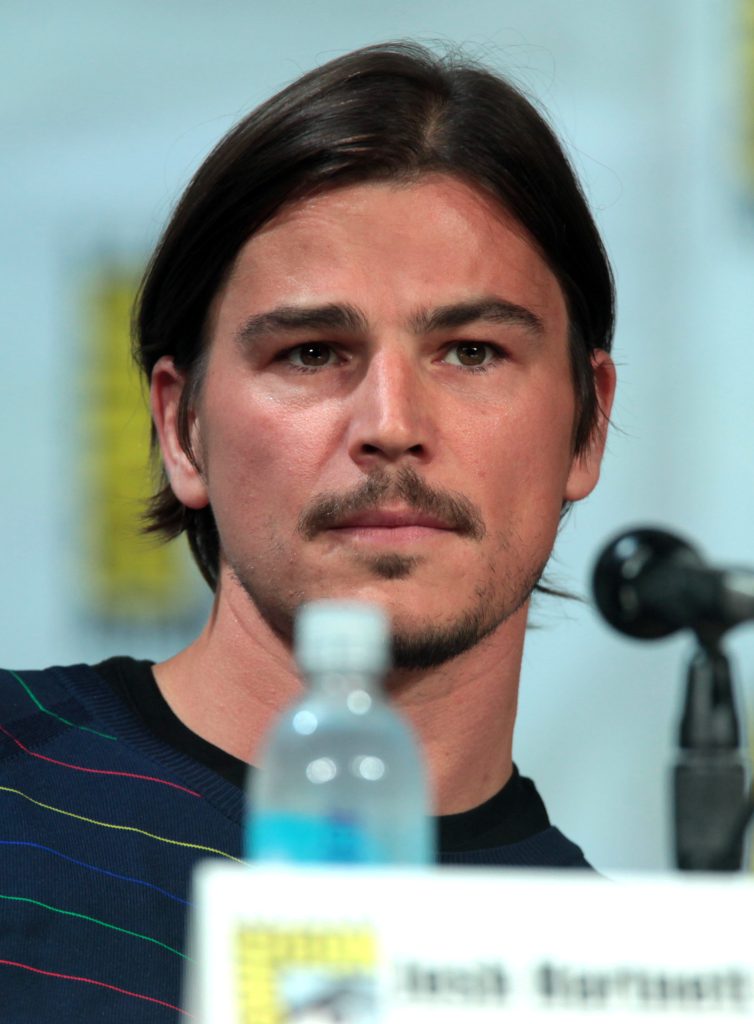
  • Josh Hartnett Walked Away From Hollywood. Now He’s Back on His Own Terms

    Photo: Gage Skidmore / Wikimedia Commons, CC BY-SA 2.0

    At the height of his early fame, Josh Hartnett seemed destined to become one of Hollywood’s biggest leading men. Instead, he did something few rising stars would dare to do: he stepped away.

    In the late 1990s and early 2000s, Hartnett became one of the most recognizable young actors in Hollywood. Films including The Faculty, The Virgin Suicides, Pearl Harbor, and Black Hawk Down turned him into an international star while he was still in his early twenties.

    But the attention came quickly. Hartnett later described being surrounded by magazine covers, paparazzi, and expectations about what kind of movie star he should become. Rather than continue chasing bigger roles, he moved away from Los Angeles and returned to a quieter life.

    He never completely stopped acting. Instead, Hartnett began choosing smaller films and projects that interested him, even when they attracted far less attention. For years, that choice created the impression that he had disappeared from Hollywood.

    In reality, he had simply changed the definition of success.

    A Different Kind of Life

    Hartnett eventually built a life far removed from the Hollywood spotlight. He and actress Tamsin Egerton married and raised their four children in England, where the family settled in the countryside.

    The distance gave Hartnett something he had struggled to maintain during his first wave of fame: control over his own life.

    It also changed the way he approached acting. Instead of accepting roles because they might make him more famous, he could wait for filmmakers, characters, and stories that genuinely interested him.

    The Return

    Then audiences began noticing Josh Hartnett again.

    His appearance in Christopher Nolan’s Oppenheimer introduced him to a new generation of moviegoers while reminding longtime fans of the actor they remembered. He followed it with a very different leading performance in M. Night Shyamalan’s thriller Trap.

    The roles did not feel like an attempt to recreate the young heartthrob of Pearl Harbor. They showed an older actor willing to play complicated, unexpected characters.

    That distinction matters.

    Hartnett’s comeback works precisely because it does not look like a conventional comeback. He is no longer trying to fit the image Hollywood created for him more than two decades ago.

    He is choosing what comes next.

    Why Josh Hartnett Matters Now

    That makes 2026 an especially interesting moment in Hartnett’s career.

    He now stars as Jeremy Crawford opposite Anne Hathaway and Dakota Johnson in Verity, the psychological thriller adapted from Colleen Hoover’s bestselling novel. The film arrived in theaters in early October, putting Hartnett back in a major romantic and dramatic role at age 48.

    At the same time, his career continues to expand beyond a single high-profile project.

    The timing makes his story larger than another Hollywood comeback.

    Josh Hartnett became famous extraordinarily young, walked away from the version of success that other people had designed for him, spent years working largely outside the center of celebrity culture, and eventually returned on different terms.

    More than two decades after Hollywood tried to decide what kind of star Josh Hartnett should become, he finally appears to have answered that question for himself.