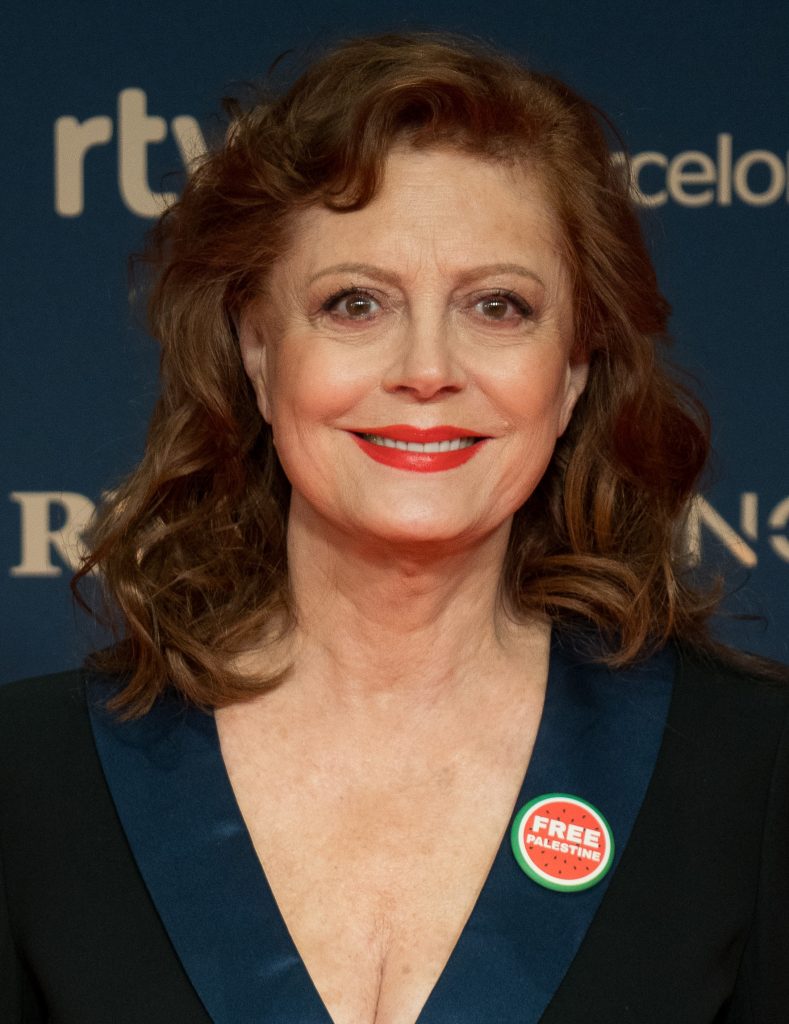
Photo: Pedro J Pacheco / Wikimedia Commons, CC BY-SA 4.0
For more than five decades, Susan Sarandon has built a career by doing something Hollywood rarely rewards for long: refusing to fit neatly into anyone else’s expectations.
Born on October 4, 1946, in New York City, Sarandon did not begin with a carefully mapped-out plan for stardom. Her early career developed almost by accident, but what followed became one of the most distinctive acting journeys of her generation.
Her film debut came in Joe in 1970. Five years later, she appeared as Janet Weiss in The Rocky Horror Picture Show, a film that grew from an unusual musical comedy into one of cinema’s enduring cult classics.
But Sarandon was never going to be defined by one kind of role.
A Career That Kept Changing
By the 1980s, Sarandon was proving that she could move easily between unconventional films, comedy, romance and serious drama.
Atlantic City brought her first Academy Award nomination. Bull Durham showed a different side of her screen presence: confident, funny and independent.
Then came one of the defining moments of her career.
In 1991, Sarandon starred as Louise Sawyer opposite Geena Davis in Thelma & Louise. The film became far more than a successful road movie. Its story of two women trying to reclaim control over their lives became a cultural landmark, and Sarandon received another Academy Award nomination.
The role captured something that would appear repeatedly throughout her career: women who were complicated, strong and unwilling to behave exactly as others expected them to.
The Long Road to an Oscar
Sarandon followed Thelma & Louise with acclaimed performances in Lorenzo’s Oil and The Client.
Then, in Dead Man Walking, she portrayed Sister Helen Prejean, a nun who becomes the spiritual adviser to a prisoner on death row.
The performance required restraint rather than glamour or spectacle. Sarandon brought empathy to a story filled with moral questions about guilt, punishment, forgiveness and human dignity.
After several previous nominations, the role finally earned her the Academy Award for Best Actress.
For many performers, winning an Oscar might represent the culmination of a career.
For Sarandon, it became another chapter.
Refusing to Disappear
Hollywood has historically offered fewer substantial roles to women as they grow older. Sarandon continued working anyway.
She appeared in films including Stepmom, Enchanted, The Lovely Bones and The Meddler, while also taking television roles. In the series Feud, she portrayed another Hollywood legend, Bette Davis.
Her willingness to keep changing has been one of the constants of her career.
Sarandon has also remained outspoken away from the screen. Her political activism and public positions have sometimes generated controversy and professional consequences, but she has rarely separated her public life from the independence that characterized many of her best-known roles.
Why Susan Sarandon Matters Now
On October 4, 2026, Susan Sarandon turns 80.
The milestone makes her career worth reconsidering not simply because of its length, but because of how she has chosen to navigate it.
Even as she enters her ninth decade, Sarandon continues to work and has spoken recently about aging with curiosity rather than trying to freeze herself in time.
That idea seems particularly appropriate for her career.
From the young Janet Weiss in The Rocky Horror Picture Show to Louise Sawyer racing across the American Southwest, from Sister Helen Prejean confronting the morality of death row to an actor continuing to work at 80, Sarandon has repeatedly moved forward rather than trying to preserve an earlier version of herself.
Her legacy is not simply an Oscar, a famous road movie or more than five decades on screen.
It is a career built around the freedom to change — and the determination to remain unmistakably herself.
Leave a Reply