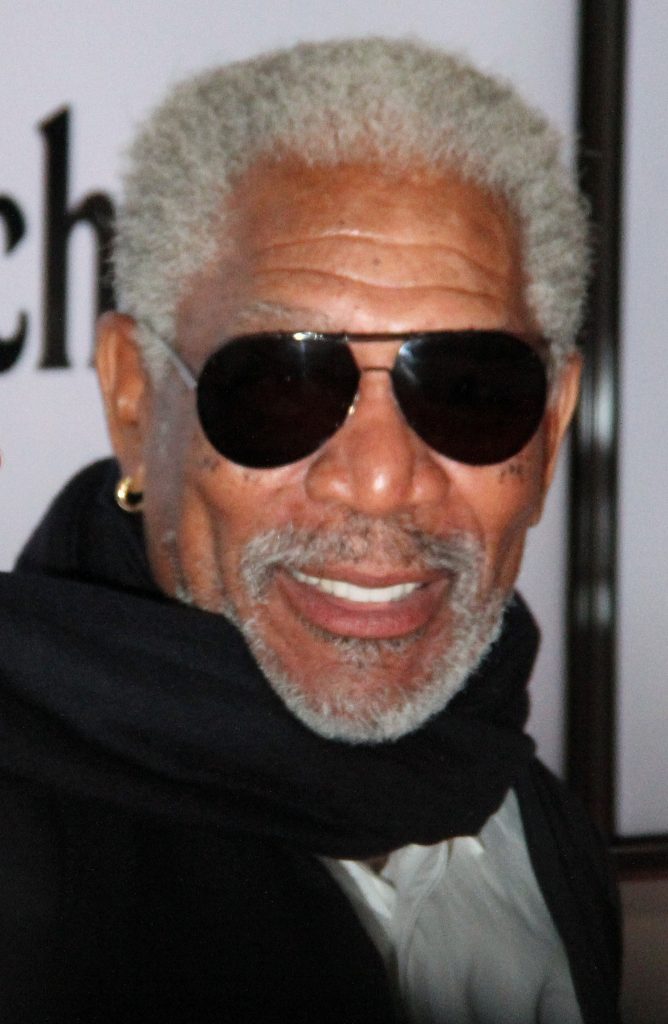
Photo: Georges Biard / Wikimedia Commons / CC BY-SA 3.0
Morgan Freeman’s rise to Hollywood fame did not happen quickly. That is precisely what makes his story so enduring.
Born in Memphis, Tennessee, on June 1, 1937, Freeman discovered acting while still young. But after graduating from high school, he took a very different path. He enlisted in the U.S. Air Force in 1955 and trained as a radar repairman.
After leaving the military in 1959, Freeman returned to the ambition that had stayed with him: acting.
The road ahead was long.
He studied acting and dance, worked on stage and gradually built a career far from the kind of Hollywood stardom for which he would later become known. In 1971, he gained national exposure on the children’s television program The Electric Company, playing several memorable characters.
It was steady work, but Freeman still had not become a major movie star.
His persistence through those years is an important part of his story. Rather than arriving in Hollywood as a young sensation, he spent decades developing his craft in theater and television.
The Turning Point
The major change came in the late 1980s.
Freeman’s performance in the 1987 film Street Smart earned him an Academy Award nomination for Best Supporting Actor. Two years later, his career accelerated dramatically.
In 1989, he appeared in three prominent films: Lean on Me, Glory and Driving Miss Daisy. His performance as chauffeur Hoke Colburn in Driving Miss Daisy — a role he had previously played on stage — brought him another Academy Award nomination and a Golden Globe.
Freeman was already in his 50s.
Instead of marking the later years of a career, that period became the beginning of his greatest international recognition.
A New Kind of Hollywood Star
The 1990s established Freeman as one of the most recognizable actors in American cinema.
His role as Ellis “Red” Redding in The Shawshank Redemption in 1994 became one of his defining performances and brought another Academy Award nomination. Films including Unforgiven, Seven and Amistad further demonstrated how easily he could move between very different characters and genres.
His calm, resonant voice also became an important part of his screen identity.
Over time, Freeman became known not only for acting but also for narration, lending his voice to documentaries and films where a sense of authority, reflection and gravity was essential.
In 2005, after decades of work, he won the Academy Award for Best Supporting Actor for Million Dollar Baby.
Why Morgan Freeman Still Matters
Morgan Freeman’s career offers a different version of the Hollywood success story.
He did not become an international movie star at 20 or 30. Much of the work that made him globally recognizable arrived after decades of stage performances, television roles and smaller opportunities.
Today, well into his 80s, Freeman remains active on screen. His career now stretches across more than six decades.
That longevity is part of why his story continues to resonate.
His path suggests that a career does not have to follow a conventional timetable. The years that appear slow from the outside can become the years in which experience, discipline and a distinctive identity are being built.
Morgan Freeman’s famous voice may be instantly recognizable today, but the journey behind it was anything but instant.
It was the product of persistence — and a remarkably long road to the spotlight.
Leave a Reply