Spoiler warning: this one explains everything, including the final shot.
Sixteen years later, people are still arguing about a spinning top. That is the mark of Inception (2010), Christopher Nolan’s dream-heist epic — and the ending deserves a proper unpacking.
The setup: Dom Cobb (Leonardo DiCaprio) is an extractor, a thief who steals secrets from inside people’s dreams. He is hired by the businessman Saito (Ken Watanabe) for the impossible job — not extraction, but inception: planting an idea so deep in a target’s mind that he believes it is his own. The target is Robert Fischer (Cillian Murphy), heir to a corporate empire, and the idea is a simple one: break up his father’s company.
To do it, Cobb assembles a team — Arthur (Joseph Gordon-Levitt), the architect Ariadne (Elliot Page), the forger Eames (Tom Hardy), and the chemist Yusuf (Dileep Rao) — and they descend through layered dreams, each level running slower than the one above. And beneath it all lies limbo: raw, unconstructed dream space where a few minutes of real time can feel like decades.
That is where Cobb’s tragedy lives. Years earlier, he and his wife Mal (Marion Cotillard) got lost in limbo and lived what felt like fifty years there. To convince her to wake up, Cobb did something he should never have done — he performed inception on his own wife, spinning her totem (a top) inside her mind-safe and planting the idea “your world is not real.” It worked too well. Back in the real world, Mal could no longer believe reality was real, and she took her own life — framing Cobb for her death and keeping him exiled from his children.
So the whole film is Cobb trying to earn his way home.
The final mission succeeds. Fischer wakes believing the idea was his. Saito, shot in the dream and lost in limbo, is found by an aged Cobb — and the old man’s recognition (“have we met?”) is enough to pull them both out. Cobb clears immigration, and walks into his home. His children turn around. He spins his top on the table — and walks away to them without watching it fall. The camera holds on the top. It spins. It wobbles, just slightly. Cut to black. Credits.
So — was it real? Here is what we actually know:
The top is Cobb’s totem. In reality, it topples. In a dream, it spins forever. The film never shows us which happens — deliberately. Nolan has refused for sixteen years to give a straight answer, and that is the point: Cobb no longer looks back. He has chosen his reality.
But the clues lean one way. Michael Caine, who plays Cobb’s father-in-law Miles, has said that every scene he appears in is reality — and he is in the final scene. Then there is the wedding ring theory: throughout the film, Cobb wears his wedding ring in dream sequences and not in real-world ones. In the final scene, his left hand is bare. And the children’s clothes — identical to his memories — are likely a deliberate red herring, Nolan’s way of reminding us that memory is unreliable.
The honest answer: it was probably real. But Nolan’s real trick is making us realize the question matters less than Cobb’s choice. He stopped checking.
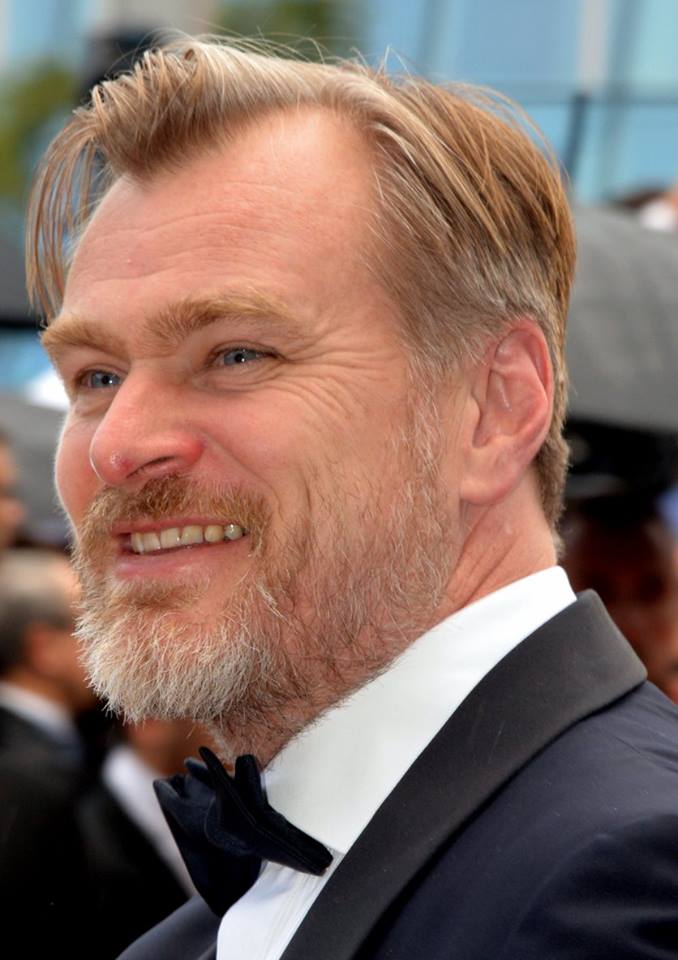
Photo: Georges Biard, CC BY-SA 3.0, via Wikimedia Commons (https://commons.wikimedia.org/wiki/File:Christopher_Nolan_Cannes_2018.jpg)

Leave a Reply